Housing adaptation grants in Ireland, explained
Three schemes, all run by your local authority, worth up to €40,000. Which one applies to you, what the OT report is for, and the four mistakes that void a claim.
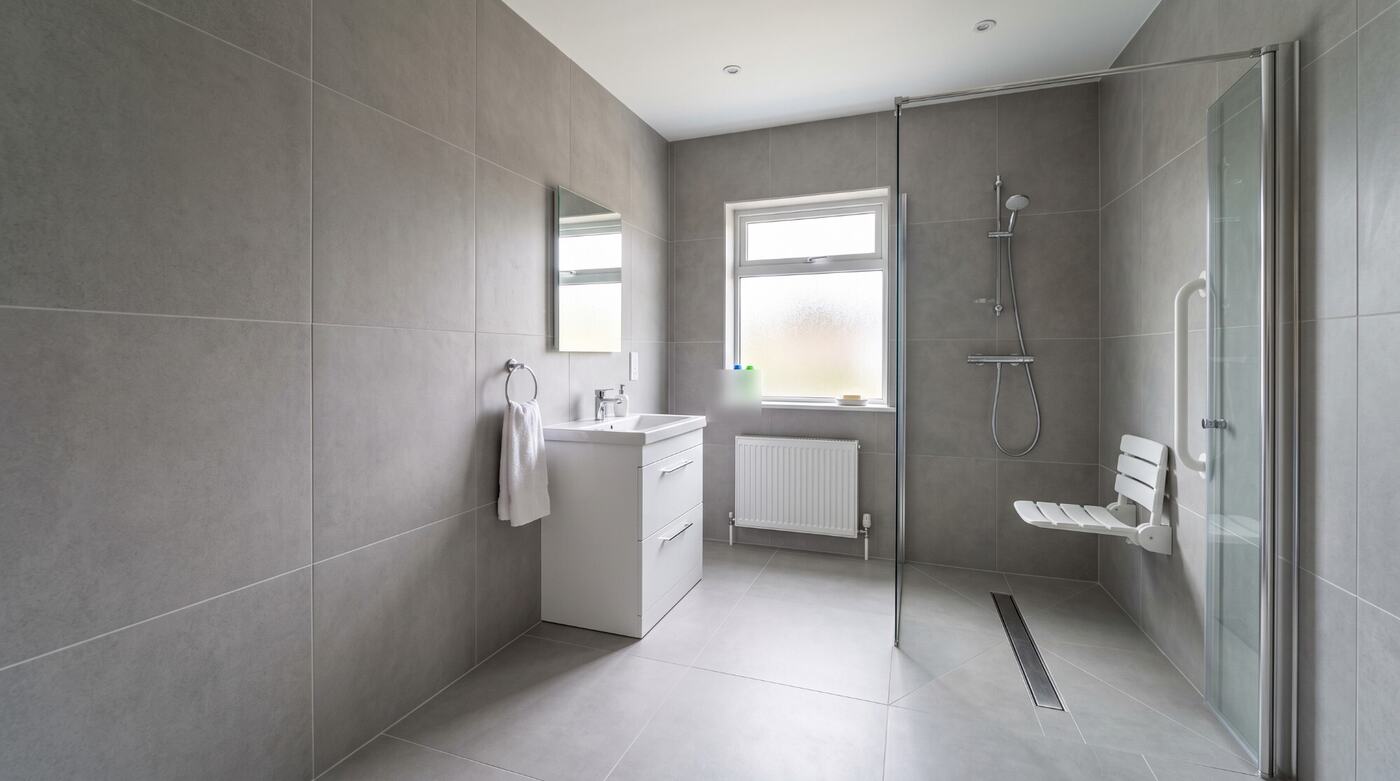
There are three separate grants for making a home easier to live in. Most people only ever hear about one. All three are run by your city or county council, are means tested, and are paid after the work is done.
Housing Adaptation Grant for People with a Disability: up to €40,000
What it covers. level-access showers, downstairs toilets, widened doorways, ramps, through-floor lifts, extensions.
Who qualifies. Means tested on gross household income. An occupational therapist report is usually required.
Mobility Aids Grant: up to €8,000
What it covers. grab rails, ramps, stairlifts, level-access showers.
Who qualifies. Household income must be under €37,500. Rose from €6,000 on 1 December 2024. OT report needed for stairlifts and hoists.
Housing Aid for Older People: up to €10,700
What it covers. rewiring, heating, roofing, structural repair.
Who qualifies. Income taper applies. An OT report is usually not required.
Figures as published on gov.ie, checked August 2026. Thresholds change and councils apply them differently, so always confirm with your local authority.
The occupational therapist report
Most adaptations need a report from an occupational therapist before the council will approve anything, and any grant-funded stairlift or hoist always does. The report says what the person needs, which is what the council funds and what every contractor should be quoting for.
Public waiting lists for an OT can run for months. You can pay a CORU-registered occupational therapist privately to get it done faster, and some councils allow part of that cost into your application. Ask your council two questions before you do anything else: how long is the OT waiting list, and can I use a private OT?
See private OTs in the directory.
The order to do things
- Check which grant. Your local authority runs all three. The scheme decides the maximum and whether you need an OT report.
- Get the OT report. Needed for most adaptations, and for any stairlift or hoist. Ring your council about the waiting list, or go private.
- Get three itemised quotes. Written and broken down, from contractors who understand grant work. Not phone estimates.
- Wait for written approval. Only then does work start. Anything done before approval is not covered.
Four mistakes that delay or void a claim
1. Never start work before written approval
Work begun before the council approves it is not covered, no matter how obvious the need or how long you've waited. This is the most common reason applications fail.
2. Three itemised quotes, not three estimates
A price over the phone or a one-line total won't do. Each quote must break down the work so the council can compare like with like.
3. Your contractor must be tax compliant
The council will not release payment to a contractor without current tax clearance. Check before you choose, not after the work is done.
4. The grant is paid in arrears
You pay first and claim after. The approved amount is also a ceiling: if the final bill comes in higher, the difference is yours.
Common questions
What is the maximum housing adaptation grant in Ireland?
€40,000, under the Housing Adaptation Grant for People with a Disability. The amount you get depends on your gross household income and the approved cost of the work.
What does the Mobility Aids Grant cover?
Basic mobility works such as grab rails, ramps, stairlifts and level-access showers, up to €8,000, for households with income under €37,500.
Do I need an OT report for a stairlift?
Yes. Any grant-funded stairlift or hoist needs an occupational therapist's report.
Is the grant paid before or after the work?
After. You pay the contractor and then claim, and the approved amount is a ceiling. If the final bill is higher, you pay the difference.
Can I get a grant for work I've already done?
No. Work started before the council's written approval is not covered.